
Abrar Ahmed Sparks Controversy with Remark After Pakistan’s First T20I vs Australia
SPORTS
Pakistan’s first T20I against Australia was expected to be remembered primarily for cricketing action, but the spotlight quickly shifted beyond the boundary ropes after spinner Abrar Ahmed made a post-match remark that triggered widespread debate.
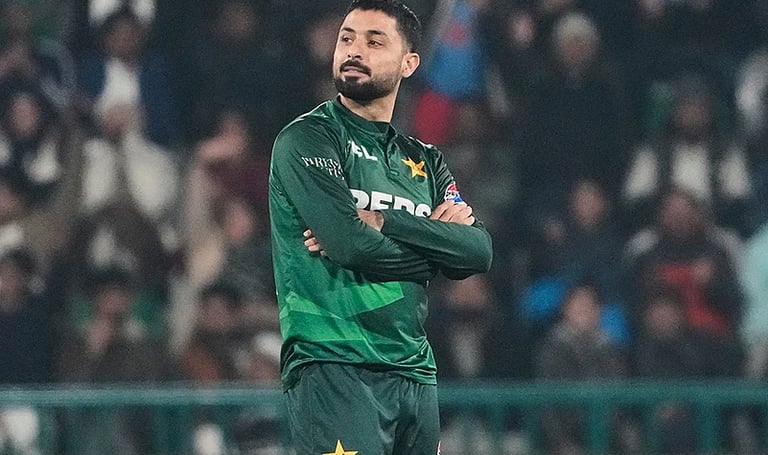
What began as a routine interaction following the game soon snowballed into a controversy, drawing reactions from fans, former players, and commentators across social media platforms.
Abrar Ahmed, who has steadily built a reputation as one of Pakistan’s most promising spin bowlers, featured prominently in discussions after the match. While his on-field performance attracted mixed reactions, it was his off-field comment that sparked sharper attention. The remark, interpreted by many as unnecessary and provocative, was perceived to have broader implications beyond the Australia series, indirectly referencing India and reigniting long-standing sensitivities among cricket fans in the subcontinent.
Cricket, especially when involving Pakistan, India, or Australia, often exists at the intersection of sport, emotion, and national pride.
Even a casually worded statement can be magnified in such an environment. Abrar’s comment, though brief, was quickly clipped, shared, and debated online, with interpretations varying widely depending on perspective. Some fans viewed it as a harmless expression of confidence, while others accused the spinner of making an avoidable and controversial comparison at an inappropriate time.
The timing of the remark further intensified the reaction. Pakistan had just concluded a challenging contest against Australia, a team widely regarded as one of the most dominant forces in world cricket. Analysts were focused on Pakistan’s performance, team combinations, and areas for improvement. Instead, the narrative shifted toward a debate about player conduct and the responsibility athletes carry when speaking in public forums.
Social media played a central role in amplifying the controversy. Within hours, hashtags related to Abrar Ahmed began trending, with users dissecting his words frame by frame. Indian cricket fans, in particular, reacted strongly, interpreting the comment as a dig that went beyond the context of the Australia match. Pakistani supporters, meanwhile, were divided—some defended Abrar, arguing that players should be allowed to speak freely, while others felt he should have exercised greater caution.
Former cricketers and experts also weighed in, offering more measured perspectives. Several pointed out that young players, especially those still establishing themselves internationally, need guidance in handling media interactions. In the modern era, where every statement can become a headline, media training is as important as technical preparation. Others stressed that controversies like these often overshadow genuine cricketing issues that deserve attention, such as team strategy, player form, and long-term planning.
Abrar Ahmed’s journey in international cricket has been marked by promise and potential. Known for his variations, control, and ability to trouble batters in the middle overs, he is considered a key part of Pakistan’s white-ball future. Incidents like this, however, underline the additional pressures faced by modern cricketers. Performance alone is no longer enough; public perception and communication have become integral aspects of a player’s career.
The Pakistan team management has not issued an official statement addressing the controversy, suggesting an intent to avoid further escalation. Sources close to the setup indicate that internal discussions may take place to remind players about maintaining focus and avoiding distractions during important tours. Such an approach aligns with the broader objective of keeping the squad united and concentrated on upcoming fixtures.
From a broader perspective, the episode reflects how cricket rivalries continue to influence narratives even when teams are not directly competing. Pakistan and India, despite not playing bilateral series regularly, remain deeply connected in the cricketing imagination of fans. Any reference—direct or indirect—tends to evoke strong emotional responses, highlighting the unique dynamics of South Asian cricket culture.
Ultimately, whether Abrar Ahmed intended to provoke or not, the controversy serves as a reminder of the scrutiny faced by international athletes. Words spoken in the heat of the moment can travel far beyond their original context. For Abrar, the focus now will be on letting his performances do the talking and ensuring that future headlines are driven by wickets and match-winning spells rather than off-field remarks.
As Pakistan continues its tour and prepares for upcoming challenges, the hope among fans and selectors alike is that cricket remains at the center of attention. Controversies may fade, but consistent performances endure—and for Abrar Ahmed, the opportunity to redefine the conversation lies firmly in his hands.
Recommended Reads:
Follow us
DISCLAIMER
© 2025 Defence Insider. All rights reserved.