
‘Call to Genocide?’ Congress Explodes Over Himanta Sarma’s Viral Video, Demands Court Action
INDIAN DEFENCE
A fresh political storm has erupted in India after a video clip attributed to Assam Chief Minister Himanta Biswa Sarma went viral on social media, triggering sharp reactions from the Indian National Congress.
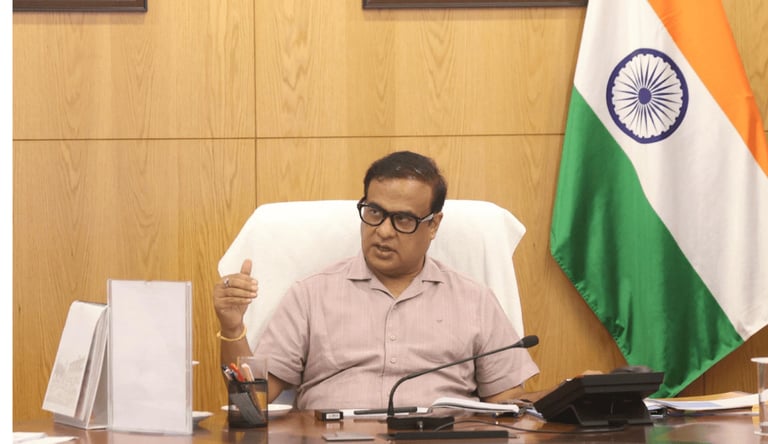
The opposition party has accused the BJP leader of making remarks that amount to a “call to genocide,” a charge the ruling party has strongly rejected. The controversy has now escalated into demands for judicial intervention, once again highlighting the volatile intersection of political speech, social media, and communal sensitivity in India’s democracy.
The Video That Sparked the Firestorm
The controversy centres on a short, widely circulated video clip in which Himanta Sarma is seen making strong remarks while addressing a public gathering. Congress leaders claim the language used in the clip is inflammatory and dangerous, alleging that it targets a specific community and could incite violence. According to the Congress, the tone and content of the speech go beyond political rhetoric and enter the realm of hate speech.
The BJP, however, has dismissed these allegations outright, arguing that the video has been taken out of context and selectively edited to create outrage. Party leaders maintain that Sarma’s comments were aimed at lawbreakers and criminals, not any community, and accuse the Congress of deliberate misrepresentation for political mileage.
Congress Demands Judicial Action
Escalating the matter, the Congress has sought judicial scrutiny, calling for legal action against the Assam Chief Minister. Senior Congress leaders described the remarks as “unconstitutional” and “morally indefensible,” arguing that elected representatives hold a responsibility to uphold social harmony, especially in a diverse country like India.
The party has also appealed to constitutional authorities, urging them to take note of what it describes as a dangerous pattern of inflammatory speech. According to Congress leaders, silence or inaction in such cases risks normalising extreme rhetoric and undermining democratic values.
BJP Pushback and Counter-Accusations
The BJP has hit back strongly, accusing the Congress of engaging in selective outrage and political hypocrisy. Party spokespersons have argued that the opposition frequently ignores similar statements made by its own leaders, while magnifying remarks by BJP figures.
BJP leaders also framed the controversy as an attempt to derail governance discussions in Assam and distract from development-related narratives. They insist that the Chief Minister’s record demonstrates a firm stance on law and order rather than communal division.
The Role of Social Media Amplification
This episode underscores the growing role of social media in shaping political controversies. Short clips, often stripped of broader context, can rapidly go viral and trigger nationwide debates within hours. While social media platforms have enabled greater political engagement, they have also intensified polarisation and misinformation.
In this case, the rapid spread of the video made it difficult for clarifications to keep pace with outrage. Political analysts note that once a narrative gains traction online, official explanations often struggle to neutralise its impact.
Legal and Constitutional Dimensions
From a legal standpoint, the issue raises important questions about freedom of speech and its limits. Indian law permits strong political expression but draws clear boundaries where speech incites violence or promotes enmity between groups.
Whether the remarks in question cross that threshold is a matter for judicial interpretation, not political debate. Legal experts argue that courts must examine the full context of the speech, intent, audience reaction, and potential impact before drawing conclusions.
The Congress’s demand for judicial action reflects a broader trend of political disputes increasingly moving into courtrooms, as parties seek institutional validation of their claims.
A Familiar Political Pattern
This controversy fits into a familiar pattern in Indian politics, where statements by high-profile leaders quickly escalate into national flashpoints. Such episodes often deepen political divides, shift attention away from policy issues, and harden public opinion along partisan lines.
Critics argue that repeated cycles of outrage and counter-outrage erode public trust and reduce complex governance challenges to headline battles. Supporters of accountability, however, insist that questioning powerful leaders is essential in a democracy, especially when rhetoric appears to threaten social cohesion.
What Lies Ahead
As demands for judicial scrutiny grow, the next steps will likely depend on whether legal petitions are formally admitted and how investigative agencies or courts respond. For now, the controversy remains firmly in the political arena, with both sides using it to mobilise supporters and shape narratives ahead of future electoral battles.
Beyond party politics, the episode serves as a reminder of the immense responsibility carried by public figures in a hyper-connected age. Words spoken at rallies no longer remain confined to local audiences; they echo nationally and internationally within minutes.
Conclusion
The row over Himanta Sarma’s viral video is not just about one speech or one leader—it reflects deeper tensions around political language, accountability, and the limits of expression in India’s democracy. As the Congress presses for judicial action and the BJP defends its leader, the ultimate test will lie in whether institutions can address the issue impartially, without political pressure.

Recommended Reads:
Follow us
DISCLAIMER
© 2025 Defence Insider. All rights reserved.