
Can India Really Stop Buying Russian Oil? The Truth Nobody Wants to Admit
INDIAN DEFENCEGLOBAL DEFENCE
Amid intensifying global geopolitical tensions and shifting energy markets, India’s relationship with Russian crude oil has become one of the most debated topics in international affairs.
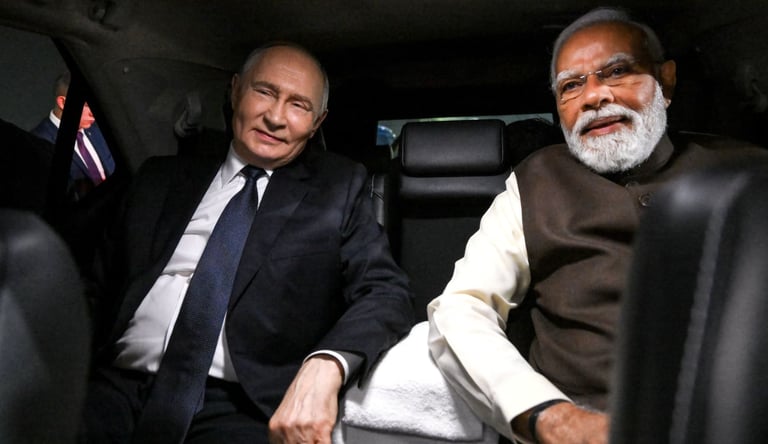
With commentary from world leaders and trade partners, many are asking a straightforward question: Can India really stop buying oil from Russia? The answer is complex — rooted in economics, energy security, geopolitics, and diplomatic strategy.
India’s Energy Reality: Import Dependence and Russia’s Role
India is one of the world’s largest energy importers. The country meets approximately 85–86% of its crude oil needs through imports, with domestic production contributing only around 13–14% of total demand. This heavy dependence on imported crude means that any major shift in suppliers carries implications for fuel prices, inflation, and economic stability.
Russia became a major supplier to India after the outbreak of the Ukraine conflict in 2022, when Western sanctions pushed European buyers away and redirected Russian oil flows eastward.
At its peak, Russian barrels accounted for up to around 36–40% of India’s total crude oil imports, significantly higher than the roughly 2% share before 2022.
This shift was driven largely by economic logic — Russian crude often came at deeply discounted prices compared to Middle Eastern grades. Those discounts helped Indian refiners save billions of dollars and kept domestic fuel prices relatively stable during periods of global volatility.
Geopolitical Pressure: The U.S. Factor
In recent months, geopolitical developments have added complexity to India’s oil import choices. The United States, under President Donald Trump, has publicly urged India to halt purchases of Russian crude as part of broader diplomatic and trade negotiations. That dialogue has included tariff reductions on Indian goods in exchange for India agreeing to reduce or halt Russian oil imports.
Specifically, the Trump administration announced a reduction of punitive tariffs on Indian exports — from 25% down to 18% — as part of a new trade framework that highlights expectations for India to decrease Russian oil purchases. However, official Indian statements have stressed that energy security — ensuring stable, affordable supply — remains the priority and that sourcing decisions will be based on national interest rather than external pressure.
Despite political rhetoric, the Kremlin itself clarified that it has not been formally notified of India’s intent to completely stop buying Russian oil. This points to a delicate balancing act in New Delhi’s diplomatic posture.
Market Realities: Why a Sudden Halt Is Difficult
Economic and logistical realities make an abrupt stop in Russian oil imports unlikely:
1. Existing Contracts and Wind-Down Periods:
Indian refiners have long-term contracts for Russian crude. Even if a policy decision were made, refineries require a wind-down period to fulfill these contractual commitments. There is no immediate government directive to cease all imports, and companies are already completing scheduled deliveries for March and beyond.
2. Refinery Configuration:
While India’s refineries are technically flexible and can process multiple crude grades, replacing nearly 1.7–1.8 million barrels per day of Russian crude is not a simple “plug and play” switch. Middle Eastern alternatives like Iraqi and Saudi crude are available, but logistical adjustments and pricing differences complicate sourcing at scale.
3. Economic Cost:
Financial analyses suggest that a sudden halt in Russian oil purchases could raise India’s fuel import bill significantly — estimates point to possible increases of several billion dollars per year. Even without Russian oil, India sources crude from over 40 countries, but price and logistical factors make shifts costly.
4. Discounts and Market Shifts:
The discount advantage that once made Russian oil so attractive has shrunk, but it still plays a role in commercial decisions. The narrowing of discount margins has encouraged some refiners to diversify toward the Middle East and even U.S. crude, but Russian barrels remain economically competitive in many instances.
Is India Already Reducing Imports?
Data shows that India’s crude oil purchases from Russia have been trending downward. Imports dropped significantly from mid-2025 highs of over 2 million barrels per day to around 1.2 million bpd by early 2026, driven in part by sanctions against major Russian oil entities and global market shifts.
Some Indian refiners, including state-owned and private players like Indian Oil, Bharat Petroleum, Reliance Industries, and others, have paused or reduced new Russian oil bookings as part of compliance with emerging international trade norms and to align with broader diversification strategies.
However, this reduction does not equate to a full cessation. Russian barrels may still reach India through alternate channels or via non-sanctioned entities — underscoring the continued complexity of global oil supply chains.
The Bottom Line: Can India Stop? Yes — But Slowly
The short answer is yes, India could eventually stop buying Russian oil, but such a transition would be gradual, market-driven, and rooted in national energy strategy, not a sudden political diktat. India’s priorities — affordable energy, diversified supply, and economic stability — mean that New Delhi will balance geopolitical pressures with pragmatic energy security considerations.
Instead of a sudden cut-off, what we are seeing is a strategic diversification: reduced dependence on Russian crude, increased buying from the Middle East, Africa, and even exploring U.S. and Venezuelan sources, all while adjusting to new trade agreements and global market signals.
In the end, India’s decision on Russian oil will reflect a blend of economics, diplomacy, and long-term energy planning — and not simply geopolitical posturing.
Recommended Reads:
Follow us
DISCLAIMER
© 2025 Defence Insider. All rights reserved.