
Did Congress Delay Indigenous Defence Manufacturing?
INDIAN DEFENCE
India’s quest for defence self-reliance has been a prominent strategic objective for decades, particularly in light of shifting geopolitical dynamics, rising border tensions, and the growing technological sophistication of modern warfare.India’s quest for defence self-reliance has been a prominent strategic objective for decades, particularly in light of shifting geopolitical dynamics, rising border tensions, and the growing technological sophistication of modern warfare.
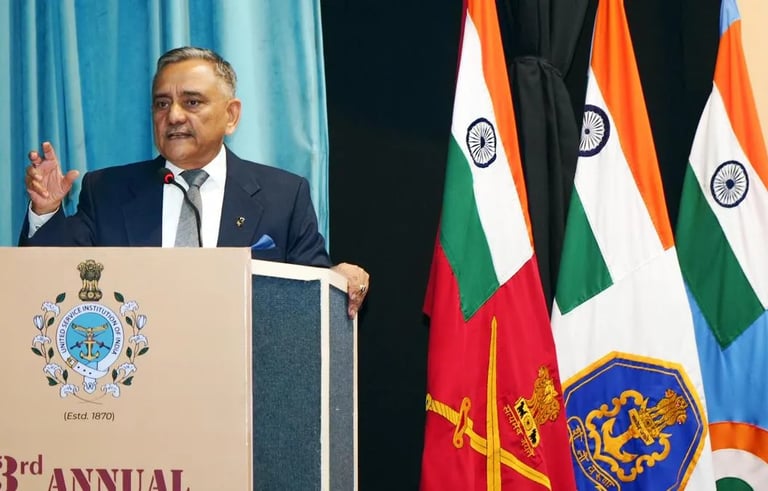
Central to this quest has been the goal of reducing dependence on foreign imports and building strong indigenous defence manufacturing capabilities. A recurring question in this context is whether the Indian National Congress — a major political force that governed India for much of the post-independence era — played a role in delaying the development of India’s indigenous defence production ecosystem. Exploring this question requires understanding the historical context of India’s defence manufacturing landscape, examining specific policy choices during Congress administrations, and comparing them with later efforts to boost self-reliance.
Historical Context: From Nehru to the 1980s
In the decades following independence in 1947, India adopted a mixed economy model that focused on building core industrial capabilities within the public sector.
Prime Minister Jawaharlal Nehru’s vision emphasized self-reliance, not only in heavy industries but also in sectors that were strategically vital, including defence. The Defence Research and Development Organisation (DRDO) was established in 1958 to spearhead research in defence technologies. Meanwhile, public sector undertakings like Hindustan Aeronautics Limited (HAL), Bharat Electronics Limited (BEL), and Mazagon Dock Limited (MDL) became anchors of the nascent defence industrial base.
While the overarching objective of indigenous capability was clear, the pace of progress varied across technologies and sectors. Early successes included the licensed production of aircraft such as the HF-24 Marut and naval vessels. However, limitations in technological depth, skills, and capital meant that large-scale, high-technology systems like modern combat aircraft, submarines, and missile systems remained elusive for many years.
Congress Leadership Through the 1990s and the Turn to Liberalization
The 1990s marked a watershed in India’s economic policy, as the government — led by the Congress party under Prime Minister P. V. Narasimha Rao — introduced broad economic liberalization measures. These reforms opened numerous sectors to private participation, reduced tariffs, and encouraged foreign investment. In theory, this shift had the potential to benefit defence production as well, by bringing in new players, technologies, and management practices.
However, in practice, defence-related liberalization lagged behind broader economic reforms. The defence sector remained heavily regulated, with significant restrictions on foreign technology transfer and private involvement. While liberalization facilitated some partnerships and technology arrangements, systemic structural barriers meant that the defence industry — still dominated by public sector units — did not fully capitalize on the potential of private sector participation or global supply chains. Critics argue that this slow pace of reform during the 1990s and early 2000s caused India to continue relying heavily on imported platforms and systems, even as global technological advances in defence accelerated.
The UPA Era and Persistent Import Dependence
The Congress-led United Progressive Alliance (UPA) government, in power from 2004 to 2014, presided over an environment where curbs on foreign direct investment in defence were gradually eased but remained restrictive relative to global norms. Defence procurement policies during this period were often criticized for delays, lack of clarity, and cumbersome procedures, leading to postponed orders and cost escalations.
Several high-profile defence acquisition projects faced setbacks in the 2000s and early 2010s, ranging from fighter aircraft deals to naval vessel procurements. While some of these delays were rooted in global supply chain issues or technical challenges, others were attributed to bureaucratic red tape and slow decision-making processes. The result was continued dependence on imports from countries like Russia, France, Israel, and the United States for critical platforms such as combat jets, helicopters, and advanced weaponry.
Moreover, while DRDO continued to make strides in missile programs like Agni and Prithvi series, and indigenous systems such as radars and electronic warfare suites, these achievements did not translate into a comprehensive defence industrial base capable of supplying most of India’s needs without external sourcing.
Shift in Emphasis: “Make in India” and Self-Reliance Under Later Governments
The narrative on indigenous defence manufacturing shifted meaningfully after 2014, when the Bharatiya Janata Party (BJP)-led government launched the “Make in India” initiative, with a pronounced focus on defence production. Reforms included raising limits on foreign direct investment, streamlining procurement policies, and creating clear categories such as “Buy Indian – Make In India” and “Buy and Make (Indian)” to prioritize indigenous design and production.
Under these policy frameworks, there was a significant increase in defence industry participation from the private sector, including both large Indian companies and foreign firms in joint ventures with Indian partners. Strategic partnerships for co-development and co-production were promoted, along with initiatives to reform defence public sector undertakings and encourage technology transfer.
As a result, some indigenous manufacturing efforts gained traction. Projects like the HAL-built Tejas Light Combat Aircraft and naval vessels like the indigenous aircraft carrier and destroyer programs demonstrated India’s growing production capabilities. There was also a noticeable shift toward creating global defence supply chains anchored in India.
Assessing the Impact of Congress Policies
So, did the Congress party delay indigenous defence manufacturing? The answer requires nuance. On the one hand, Congress-led governments historically emphasized self-reliance as a national goal. Founding figures like Nehru laid the groundwork for an indigenous industrial base, and successive governments maintained structures that gave birth to DRDO and other strategic institutions. On the other hand, critics argue that bureaucratic inertia, slow reform pace, and regulatory caution during much of the Congress governance period constrained the development of a dynamic, competitive, and private-sector-enabled defence industrial ecosystem.
The delays in making key procurement decisions, the cautious approach to foreign partnerships, and the slow opening up of the sector arguably contributed to extended import dependence. These factors, combined with rapid global technological evolution, meant that India did not fully leverage opportunities to build a modern, indigenous defence manufacturing landscape during those decades.
However, it is also important to recognize that defence industrialization is inherently complex, involving high technology, long development cycles, and vast capital requirements. Achieving self-reliance in this domain is neither straightforward nor easily accelerated by political will alone.
Conclusion: Progress and the Path Ahead
India’s journey toward indigenous defence manufacturing has been marked by both ambition and challenge. While Congress-led governments laid foundational pillars for self-reliance, subsequent reforms under later administrations accelerated the pace and broadened participation in ways that were difficult in earlier decades. It would be simplistic to ascribe the delay entirely to one political party, as systemic constraints, global dynamics, and technological hurdles played significant roles.
What remains clear is that India stands at a critical juncture in its defence industrial narrative. For the country to confidently reduce dependence on imports and build world-class capabilities, it must continue to refine policies, encourage innovation, deepen private sector involvement, and invest in cutting-edge technology. Reflecting on past policy choices — including those during Congress tenures — offers valuable lessons for shaping a more self-reliant defence future.
Recommended Reads:
Follow us
DISCLAIMER
© 2025 Defence Insider. All rights reserved.