
General Naravane Confirms Memoir Unpublished Amid Delhi Police FIR
INDIAN DEFENCE
A unique controversy has erupted in India involving a yet-to-be-released memoir by former Indian Army Chief General Manoj Mukund Naravane. What began as political disagreement over statements in Parliament quickly escalated into a police investigation, legal notices to a major publisher, and fierce public debate over the status of the book and its circulation.
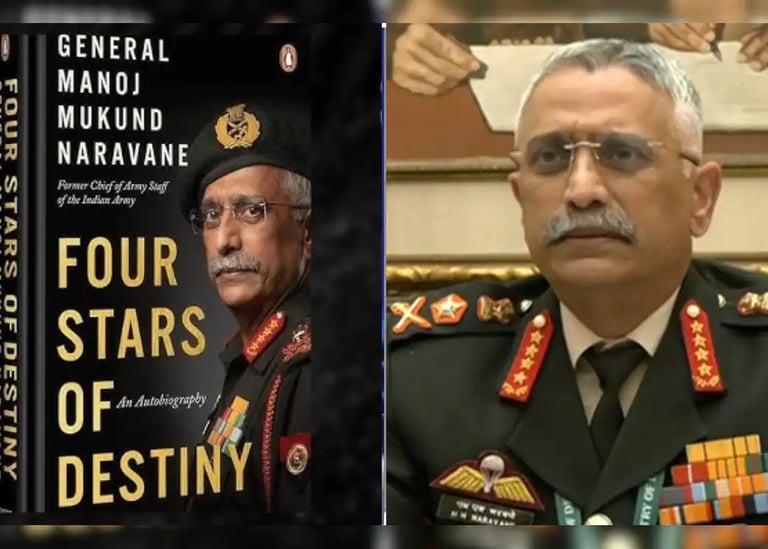
At the centre of the storm is the question: Is the memoir actually unpublished, and why has it sparked such widespread attention?
The memoir in question is titled Four Stars of Destiny, a much-anticipated account of General Naravane’s career and the defence challenges India faced under his leadership. The drama unfolded on social media, in Parliament, and in legal corridors — but first, it was a matter of conflicting statements about whether the book had been released at all.
The Core Clarification: Unpublished Memoir
Amid the confusion, the former Army Chief himself stepped forward to settle one part of the debate. General Naravane endorsed a statement from his publisher, Penguin Random House India, confirming that no official version of Four Stars of Destiny has been published or made available to the public. In a post on X (formerly Twitter), he shared the publisher’s clarification that the book remains unpublished and is still pending necessary approvals.
Penguin’s statement was unequivocal: although the company holds exclusive rights to publish the memoir, no copies — physical or digital — have been released, distributed, or sold. The publisher also warned against any alleged circulation, stressing that unauthorised copies on websites or social platforms could amount to copyright infringement.
This clarification directly addressed earlier claims circulating on the internet, some of which suggested that the book had already found its way online. In fact, platforms had shown what appeared to be the manuscript’s cover and even downloadable copies, contributing to a perception that Four Stars of Destiny was already available. Those reports now face scrutiny as false or unauthorised distributions.
Delhi Police Step In: FIR and Investigation
Following reports of alleged unauthorised circulation of the manuscript, the Delhi Police Special Cell registered a First Information Report (FIR) under sections that include criminal conspiracy and alleged unauthorised dissemination of unpublished material. The case arose after a PDF copy of the memoir — purportedly prepared by Penguin Random House India — was found on some websites and was being shared without defence clearance.
A senior police official explained that investigators are focusing on how the draft of the book appeared online before approval by the Ministry of Defence. The probe looks at claims that the manuscript was uploaded on obscure domain sites and other platforms, bypassing mandatory clearance protocols. Authorities are analysing ISBN metadata to trace the source of those digital copies and understand how they reached the public domain.
The FIR and notice to Penguin indicate that this is not merely a matter of copyright but potentially a breach of official norms regarding unpublished material connected to national security. The police have formally questioned why the publisher did not immediately report the leak once it became aware of unauthorised circulation and have even suggested reaching out to social media platforms to trace uploaders.
Political Lightning Rod: Parliament Row and Reactions
This story did not remain confined to legal and law enforcement circles. It rapidly became a flashpoint in the Indian Parliament, where opposition leader Rahul Gandhi tried to quote alleged excerpts from Four Stars of Destiny during a debate on national security. The Speaker ruled that citing an unpublished work is not permissible because it is not authenticated and could be speculative or inaccurate. This ruling led to a heated confrontation between lawmakers from different parties.
Rahul Gandhi, however, pushed back by holding up what he said was a copy of the unpublished memoir inside the Parliament complex. He also cited a 2023 tweet by General Naravane promoting the book’s availability online, framing the incident as evidence that the government was obscuring uncomfortable details about military decision-making, especially during the 2020 India–China border standoff.
In response, the ruling party accused Gandhi of presenting fiction in Parliament and potentially violating rules against disseminating unpublished material — a serious charge given the sensitive defence context. BJP spokespersons also demanded an apology, saying that the claims made by the opposition were misleading and could harm national interests.
Why This Matters Beyond Headlines
This controversy touches on several important issues:
National Security and Publication Protocols:
Former military leaders must obtain clearance from defence authorities before publishing works that could disclose sensitive operational details. The fact that a pre-print copy circulated online before such clearance sparked the FIR.Parliamentary Decorum and Rules:
Quoting from unpublished sources in the Lok Sabha is prohibited to prevent unverified information from driving legislative debates. The Speaker’s intervention underscores this principle.Copyright and Unauthorized Distribution:
Penguin’s warning highlights the legal implications of circulating copyrighted material without authorisation. Such actions can affect publishing rights and legal remedies, complicating the broader controversy.Political Narrative and Public Perception:
The clash between the opposition and the government over the memoir’s contents and status illustrates how defence issues and historical interpretations can become politicised quickly in India’s charged political environment, influencing public discourse and media narratives.
Where Things Stand Now
As of now, both the police investigation and the political debate continue. The Special Cell’s notice to Penguin seeks clarity on how the book manuscript became available, while the FIR in the case remains under examination. General Naravane’s public backing of the publisher’s statement has added weight to the claim that the memoir has not reached publication, even as political figures dispute related assertions.
The memoir's status as unpublished makes it central to a complex intersection of legal, political, and national security considerations. How this controversy ultimately unfolds — in courts, in Parliament, and in public opinion — could set precedents around how defence-related memoirs are handled and how such material is referenced in political discourse.

Recommended Reads:
Follow us
DISCLAIMER
© 2025 Defence Insider. All rights reserved.