
Global Oil Markets on Edge as Iran Threatens to Block the Strait of Hormuz
GLOBAL DEFENCE
Rising tensions in the Middle East have sparked serious concerns in global energy markets after Iran warned that it could block the Strait of Hormuz, one of the world’s most critical oil shipping routes.
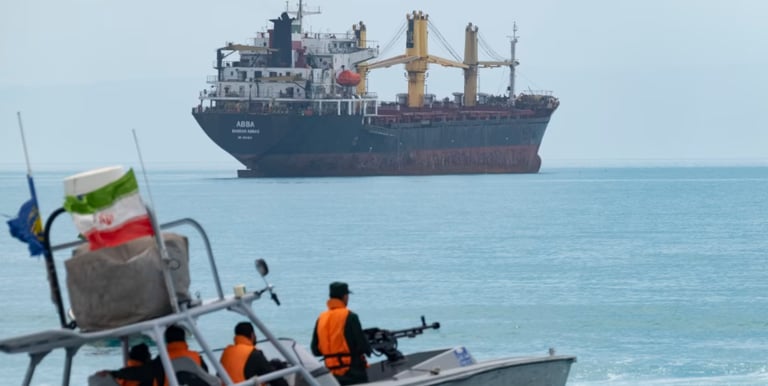
The threat comes amid the intensifying conflict between Iran, Israel, and the United States, raising fears of a major disruption in global oil supplies and a possible economic shock worldwide.
The Strait of Hormuz is a narrow waterway located between Oman and Iran, connecting the Persian Gulf to the Arabian Sea. Despite its relatively small size, the strait plays a crucial role in the global energy trade. Nearly one-fifth of the world’s oil supply passes through this route every day, making it one of the most strategically important maritime chokepoints on the planet.
Iran’s latest warning came after several days of intense military activity in the region. Iranian officials have accused the United States and Israel of launching coordinated strikes on Iranian military facilities and strategic infrastructure.
According to Tehran, if the attacks continue, the country may take “decisive measures” to protect its national security interests, including restricting maritime traffic in the strait.
Military analysts believe that Iran has the capability to disrupt shipping in the area using naval mines, anti-ship missiles, drones, and fast attack boats. Over the years, Iran has invested heavily in asymmetric naval warfare, specifically designed to challenge larger naval forces in narrow waterways like the Strait of Hormuz. Even a temporary disruption in the strait could send shockwaves through global markets.
In response to the growing threat, the United States has increased the presence of its naval forces in the region. Warships and aircraft carriers from the United States Navy have reportedly moved closer to the Persian Gulf to ensure the security of commercial shipping lanes. The move is intended to reassure global markets and signal that the United States is prepared to keep the strategic waterway open.
Israel has also raised its military alert level amid the escalating situation. Israeli defense officials fear that Iran may attempt to widen the conflict by targeting energy infrastructure or shipping routes. Such a move could potentially draw more countries into the crisis and transform the current confrontation into a broader regional conflict.
Global energy markets have already begun reacting to the uncertainty. Oil prices surged sharply in international trading following Iran’s statement about the Strait of Hormuz. Investors worry that even the possibility of disruption could create shortages and drive prices higher. Countries heavily dependent on imported oil, particularly in Asia and Europe, are closely monitoring the situation.
Energy experts warn that if the Strait of Hormuz were to be closed even for a short period, the impact on the global economy could be severe. Many of the world’s largest oil producers—including Saudi Arabia, United Arab Emirates, and Kuwait—export most of their oil through this route. Any disruption could lead to supply shortages, rising fuel prices, and inflation across multiple countries.
Meanwhile, international diplomatic efforts are underway to prevent the situation from escalating further. Several world leaders have called for restraint and urged all parties involved to return to negotiations. The United Nations has also expressed deep concern about the growing instability and warned that a conflict affecting global shipping lanes could have serious consequences for international security.
Security analysts believe that Iran’s threat may be partly strategic, aimed at increasing pressure on its adversaries and gaining leverage in potential negotiations. However, the risk of miscalculation remains high. With multiple naval forces operating in a confined area and tensions running high, even a small incident could quickly escalate into a larger confrontation.
For the global economy, the stakes are enormous. The Strait of Hormuz is not just a regional waterway—it is a vital artery for global energy supply. Any prolonged disruption could affect everything from transportation costs to electricity prices in countries thousands of miles away.
As tensions continue to rise, governments, financial markets, and military strategists around the world are closely watching developments in the Persian Gulf. The coming days will be critical in determining whether diplomatic efforts can ease the crisis or whether the situation will escalate into a larger conflict with far-reaching consequences.

Recommended Reads:
Follow us
DISCLAIMER
© 2025 Defence Insider. All rights reserved.