
India-Pakistan T20 Match Row: ICC Warns PCB Over Boycott Move #indvspak #t20wc
SPORTS
The highly anticipated ICC Men’s T20 World Cup 2026 is now engulfed in controversy even before the tournament’s official start, as the Pakistan Cricket Board (PCB) has indicated it may boycott its marquee group-stage match against arch-rival India, scheduled for February 15.
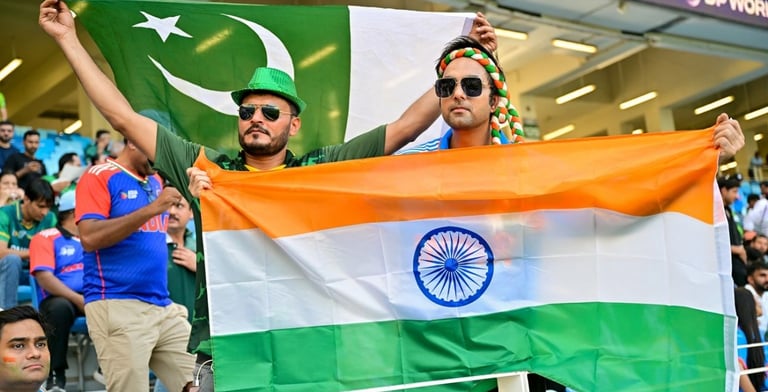
The International Cricket Council (ICC) has issued a stern warning, cautioning Pakistan that refusing to play could result in legal, financial, and sporting consequences for the board—and potentially for the broader cricketing community.
The India-Pakistan clash has historically been the biggest event in ICC competitions, drawing enormous global viewership and commercial attention. In the context of the 2026 World Cup—co-hosted by India and Sri Lanka—the fixture is expected to generate significant advertising revenue, with broadcasters banking on massive audience engagement. That makes the potential boycott not just a sporting shock, but a major commercial disruption.
Pakistan’s Boycott Decision and the Broader Backdrop
According to sources close to the PCB and the Pakistan government, Islamabad has formally approved the national team’s participation in the T20 World Cup but stipulated that the players will not take the field against India. The announcement was made via the government’s official social media account, underscoring that the decision reflects a political directive rather than a sports administration choice.
This stance appears to be rooted in broader regional tensions and a gesture of solidarity with Bangladesh, which had earlier withdrawn from cricket fixtures in India due to longstanding diplomatic concerns. Pakistan’s decision is seen domestically as a principled stand against what it perceives as unfair treatment, though the specific motivations remain contested in international commentary.
For cricket fans around the world, the possibility that this historic rivalry might not be played has been met with disbelief. The India-Pakistan fixture usually ranks among the sport’s most watched matches, generating intense fan interest and sponsorship commitments. Without it, broadcasters could face significant revenue shortfalls, estimated to run into hundreds of millions of dollars.
ICC’s Warning: Legal, Financial, and Sporting Fallout
The ICC has responded strongly to Pakistan’s proposed boycott. As the global governing body of cricket, it insists that all teams must fulfill their scheduled fixtures to uphold the integrity, fairness, and commercial viability of its tournaments. The ICC made it clear that selective participation undermines the spirit of international cricket and could have long-term negative consequences for the sport.
One of the most serious risks flagged by the ICC is potential legal action by the tournament’s official broadcaster, JioStar. As part of a multi-year media rights deal, JioStar secured the rights to broadcast all World Cup matches, relying on marquee games like India vs Pakistan to attract viewers and advertising revenue. If Pakistan refuses to play, JioStar could pursue legal remedies against the ICC, and potentially the PCB, for breach of contract or lost revenue.
Beyond broadcaster litigation, the ICC might also withhold Pakistan’s annual revenue share, estimated at roughly USD 35 million. This revenue is crucial for funding cricket operations, domestic leagues, and player salaries in Pakistan. Withholding it would have serious financial implications for the PCB and could weaken the board’s ability to manage the sport domestically.
Additionally, the ICC’s playing conditions state that if a team fails to take the field at the scheduled time, the opposing team is awarded the match by walkover, and the non-participating team may forfeit points and suffer a negative impact on net run rate. For Pakistan, this could mean an early exit from the tournament even if it performs well in other matches.
Political and Sporting Reactions
The row has sparked diverse reactions from cricketing figures and former players. Some critics have condemned Pakistan’s stance as politicizing sport, arguing that decisions made off the field should not disrupt one of cricket’s most important rivalries. Others, particularly in Pakistan’s domestic media, have defended the boycott as a legitimate expression of national policy and solidarity with neighboring decisions.
Within the ICC, member boards are reportedly discussing possible measures to resolve the crisis, including emergency meetings to determine whether sanctions should be imposed or whether a mutual compromise could be reached. The council has emphasized that its priority remains the smooth conduct of the World Cup, while still respecting the roles of member nations’ governments in matters of national importance.
Commercial Impacts and Global Cricket’s Future
If Pakistan does proceed with the boycott, the financial impact on the World Cup ecosystem is expected to be severe. Beyond lost broadcast and advertising revenue, sponsors tied to the India-Pakistan match may renegotiate deals or withdraw support. This could affect the tournament’s profitability and the economic models for future ICC events.
Furthermore, strategic questions are emerging about how international cricket navigates geopolitical tensions. While past conflicts have affected bilateral tours, this epochal boycott raises fresh debate on whether sport can remain insulated from broader diplomatic dynamics. Many observers believe the ICC may need to update its policies on political interference and clarify the consequences for member boards.
What Lies Ahead
As the February 15 match date approaches, all eyes are on the ICC and PCB for how they respond. The ICC has indicated that written communication from the PCB could be required to formalize any decision, and discussions may continue up to the last minute. Legal, commercial, and sporting consequences remain uncertain, but what is clear is that this controversy has already reshaped the narrative around the T20 World Cup.
Cricket fans from India, Pakistan, and around the world will be watching closely—not just for the on-field action, but for how international sport continues to balance tradition, politics, and commercial imperatives in an increasingly complex global landscape.
Recommended Reads:
Follow us
DISCLAIMER
© 2025 Defence Insider. All rights reserved.