
India–US Trade Deal Twist: Why Did America Change Its Statement?
GLOBAL DEFENCEINDIAN DEFENCE
A major India–United States trade agreement recently made global headlines, not just for its economic implications, but because of a curious twist in how the deal was communicated
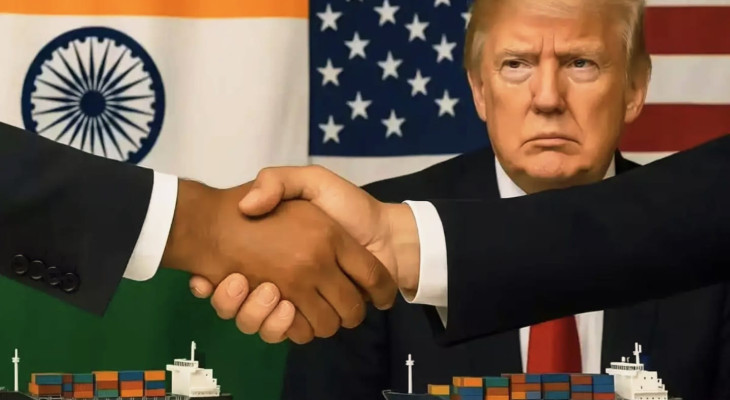
particularly by the United States government. Within days after the initial announcement, the White House quietly revised key language in the official “fact sheet” describing the pact, sparking widespread confusion among policymakers, businesses, farmers and political commentators across both countries.
The original India–US trade deal, unveiled in early February 2026 following intensive negotiations between Indian Prime Minister Narendra Modi and US President Donald Trump, appeared to outline a broad framework for reciprocal tariff reductions, increased bilateral purchases, and deeper economic cooperation. However, when the White House updated its summary of the agreement, several significant changes were made — leading observers to wonder what had shifted during the final stages of the talks and whether all of the revisions accurately reflected what both governments had agreed to.
What Changed — Key Revisions in the Trade Factsheet
The initial version of the US fact sheet included some ambitious language. It stated that India would “eliminate or reduce tariffs on all US industrial goods and a wide range of US food and agricultural products,” and even listed “certain pulses” — traditionally a politically sensitive agricultural category for India — as part of the products on which tariffs would change. It also described India as “committed” to purchasing over USD 500 billion worth of American goods, spanning energy, technology and other strategic sectors over the next five years.
However, in the revised version issued days later:
The reference to “certain pulses” was removed entirely, meaning that this category would no longer be explicitly mentioned in the tariff reduction duties section.
The language describing India’s planned purchases changed from a definite “committed to buy” to a softer “intends to buy” — a shift that carries important legal and political nuance, as the latter is understood more as an aspiration than a binding promise.
References to India “will remove digital services taxes” were altered to reflect a commitment to “negotiate digital trade rules,” aligning the factsheet more closely with India’s policy reality.
These edits demonstrate that the White House chose to soften or omit language that could have significant economic and political consequences for India once implementation begins. They also aligned the factsheet more closely with India’s own official statements and domestic sensitivities.
Why the Revisions Matter
On the surface, tweaking a factsheet might seem like a minor bureaucratic task. But in the context of high-stakes international trade agreements, wording matters a great deal — especially when it represents commitments expected to guide economic policy and investor expectations in both countries.
For example, the inclusion of pulses — a staple food category in India — could have been seen as India agreeing to greater market access to American agricultural exports. Pulses are culturally and politically sensitive in India, given the sector’s importance to rural livelihoods and food security, and actual tariff reductions in that area could have sparked pushback from farmers and political critics. By dropping that reference, the White House effectively removed a term that was never part of the original joint declaration issued by both governments, reducing potential friction.
Similarly, committed vs intends is not just semantics. In trade negotiations, the former suggests a firm, actionable obligation, whereas the latter suggests a goal without legal binding force. By aligning the wording with India’s actual negotiating position — which was about an intention to increase purchases rather than a contractual purchase obligation — the revision avoids implied commitments that might not have been fully agreed upon.
The shift away from language implying the removal of digital services taxes is also significant. India had already abolished its 6% equalisation levy on digital advertising services early in 2025 — well before the trade framework was announced — and the revised factsheet reflects that, clarifying that further negotiations on digital trade rules would be part of future discussions rather than an immediate concession.
Together, these revisions suggest that the original text may have overstated or mismatched certain aspects of the agreement, prompting the White House to adjust the published version to better match the actual understanding between New Delhi and Washington.
Political and Public Reaction
The revisions have stirred debate on both sides of the political aisle. In India, some opposition leaders criticized the deal as a “coerced concession,” arguing that the government had presented an overly optimistic narrative that did not fully reflect the United States’ true stance or terms. Congress leader Jairam Ramesh specifically said claims of diplomatic victory were misleading because the US’s own characterization of the agreement did not match the Indian government’s narrative.
On the other hand, supporters of the deal within India’s ruling party praised the agreement for reducing tariffs and opening up American markets for Indian exports, while asserting that sensitive sectors like agriculture had been protected. Punjab BJP President Sunil Jakhar defended the pact, saying it would benefit rural youth and ensure duty-free access for several Indian products without harming farmers in key regions.
These reactions highlight a broader political divide: while the government sees the deal as a step toward strengthening India’s global trade footprint, critics argue that confusion over the factsheet reflects a lack of clarity and potential concessions that may not fully align with national interests.
Geopolitical and Economic Implications
Beyond domestic politics, the trade deal and its associated communication confusion have broader geopolitical implications. Analysts suggest that the revision may also reflect a tactical adjustment by the United States to avoid diplomatic embarrassment or perceived misrepresentation. It could also signal Washington’s sensitivity to domestic agricultural and industrial politics in India, where tariff cuts are closely scrutinised by interest groups.
The trade pact itself — reducing tariffs from as high as 50% to 18% on several goods — is seen as a strategic move to deepen economic ties and balance global supply chains at a time when trade relationships are being reshaped by geopolitical competition, particularly with China. It’s also part of India’s broader effort to diversify trade partners while protecting vulnerable domestic sectors.
Yet skepticism remains. Experts have questioned whether India’s ambitious plan to import USD 500 billion in American goods over five years is realistic, and warned that such large import targets could widen the trade deficit unless carefully managed. The changes from “committed” to “intends” reflect the practical difficulties of imposing fixed targets on dynamic markets.

Recommended Reads:
Follow us
DISCLAIMER
© 2025 Defence Insider. All rights reserved.