
Is Corporate America Ready to Challenge Trump’s Policies?
GLOBAL DEFENCE
In early 2026, the question of whether Corporate America is prepared to challenge the policies of President Donald Trump’s administration has moved from theoretical debate to real-time drama.
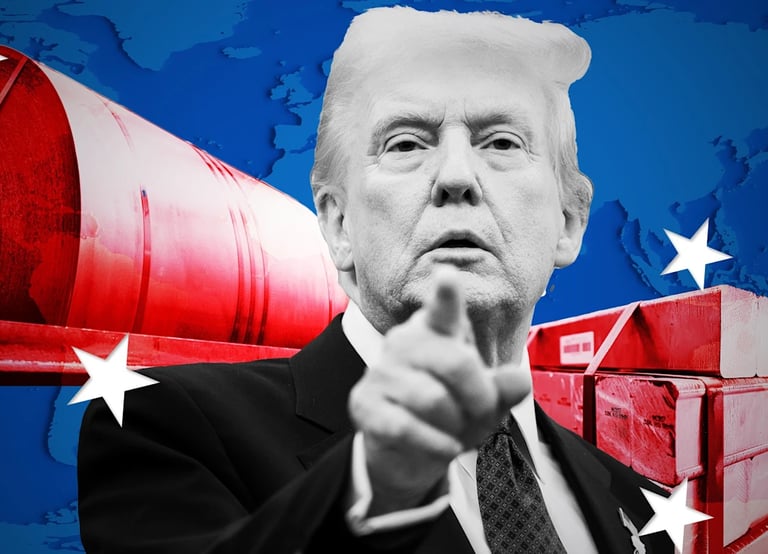
For years, business leaders largely stayed quiet or offered mild criticisms in public when political pressure mounted. But recent events — particularly around immigration enforcement and controversial federal actions — have forced many CEOs and corporate voices into an uncomfortable crossroads: speak out or stay silent.
A History of Hesitation and Mild Pushback
Historically, major U.S. corporations have been cautious about openly confronting presidential policies, and this trend has largely continued under Trump’s second term. Early in 2026, several top executives offered what observers described as “mild pushback” — comments emphasizing abstract principles like free markets or global engagement, without naming Trump or his policies directly. Business leaders often frame their remarks in language focused on stability, innovation, or economic openness rather than political confrontation. This cautious approach allows companies to signal values without triggering political backlash that could hurt their market position or regulatory standing.
Economists and corporate governance experts note that this muted response reflects a broader tension in modern capitalism: companies want to maintain social legitimacy but also avoid endangering shareholder value by entering partisan disputes. Many boards and CEOs see a direct political fight with the executive branch as a high-risk strategy that could backfire.
Catalyst for New Corporate Engagement
However, recent immigration enforcement operations have become a flashpoint that is testing this reluctance. After the controversial shooting of an American in Minneapolis by U.S. Immigration and Customs Enforcement (ICE) agents — an incident that drew national outrage — employees at major tech firms organized petitions and open letters demanding that corporate leaders publicly push the administration to withdraw ICE from major cities and terminate government contracts. These petitions, signed by hundreds of workers from companies like Google, Amazon, Meta, and others, reflect internal pressure on CEOs to take a firmer ethical stance.
This groundswell of employee activism is significant because it highlights a shift: the demand for corporate engagement is not only coming from activist shareholders or external interest groups but also from within companies themselves. Tech workers, in particular, are urging their management to do more than issue general policy statements — they want explicit opposition to government actions they view as unjust.
In some cases, CEOs have responded. Sam Altman of OpenAI and Tim Cook of Apple issued statements condemning what they described as “overreach” by ICE and encouraging de-escalation. These public remarks marked a departure from pure corporate reticence and signaled a willingness to engage directly with an administration policy.
Investor and Shareholder Pressures
Another layer of pressure comes from shareholders. Activist investors and social justice-oriented asset managers are increasingly filing proposals urging companies to analyze and disclose how Trump’s policies — especially around immigration enforcement — could affect their workforce, operations, and consumer base. For large companies with substantial foreign-born workforces or immigrant communities as customers, these issues are not abstract but directly tied to financial performance.
While most of these proposals are unlikely to pass outright at annual shareholder meetings, even gaining substantial minority support (20-40%) can push boards to reassess their public posture. In an era where environmental, social, and governance (ESG) concerns influence investment decisions, companies cannot afford to remain completely aloof from societal debates.
Fear vs. Responsibility
Despite these pressures, many corporate leaders still operate under a central fear: criticism of Trump could invite retaliation. Business leaders worry about regulatory or legislative backlash, loss of government contracts, and negative media coverage. Past interactions between the administration and major companies have demonstrated that Trump does not shy away from confronting his critics, sometimes publicly threatening firms that diverge from his policy goals.
This fear permeates the executive suite. CEOs are often caught between upholding corporate values — such as respect for human rights, diversity, and ethical governance — and prioritizing their fiduciary duties to shareholders. Some executives, like LinkedIn co-founder Reid Hoffman, openly criticize corporate silence, arguing that leaders have a moral obligation to speak up during critical moments. Hoffman contends that silence is not a viable strategy and that business leaders must use their influence for societal good, even if it is politically risky.
Is Corporate America Ready to Shift Gears?
So, is Corporate America ready to challenge Trump’s policies? The answer is: not uniformly, but increasingly potentially. There is a growing segment of corporate America, especially among tech firms and socially conscious investors, that is willing to take public stands against government actions perceived as harmful or unethical. This represents a significant evolution from the cautious, often neutral posture that defined much of corporate engagement during Trump’s first term.
At the same time, much of the business establishment remains hesitant. Many CEOs prefer indirect criticism, focus on policy specifics rather than political confrontation, or avoid public statements altogether. The legacy of self-preservation in corporate governance is strong, and many boardrooms are still weighing the costs and benefits of public political engagement.
Conclusion: A New Landscape of Corporate Political Engagement
In 2026, Corporate America stands at a crossroads. The traditional model of cautious, brand-protective silence is being challenged by internal activism, shareholder demands, and ethical considerations that cut into core business interests. Some companies are beginning to speak out more forcefully, while others are still circling the wagons.
What remains clear is that the old playbook — stay neutral and hope political storms pass — may no longer be sustainable in an era of heightened social awareness and employee empowerment. Whether this shift results in a consistent and powerful corporate challenge to Trump’s policies, or simply more targeted and selective interventions, remains to be seen. What is undeniable, however, is that the question of corporate moral responsibility — versus shareholder risk avoidance — has never been more central to the identity of American business.
Recommended Reads:
Follow us
DISCLAIMER
© 2025 Defence Insider. All rights reserved.