
New UGC Bill 2026: What Are the New Equity Rules
INDIAN DEFENCE
The University Grants Commission (UGC) Bill 2026 has introduced sweeping new equity regulations aimed at tackling discrimination and promoting fairness in Indian higher education institutions.
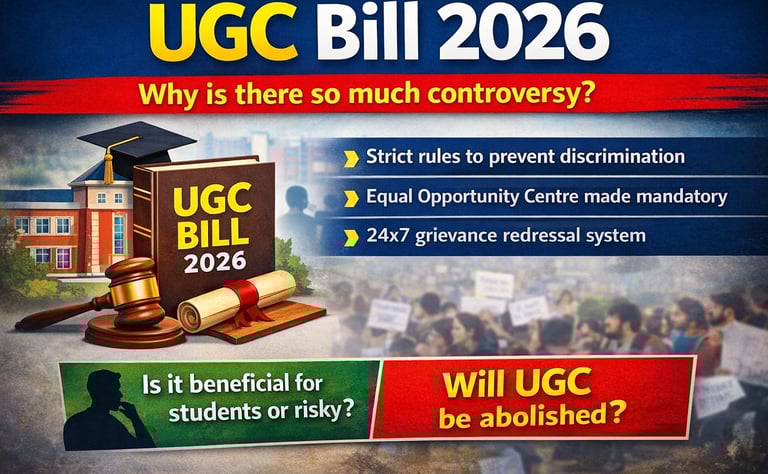

Under the new system, every university and college must establish an Equal Opportunity Centre (EOC) responsible for addressing complaints related to discrimination based on caste, religion, gender, disability, and other identities. Each EOC will support an Equity Committee comprising representatives from Scheduled Castes (SC), Scheduled Tribes (ST), Other Backward Classes (OBC), women, and persons with disabilities. These bodies are tasked with handling grievances, promoting inclusive practices, and monitoring campus dynamics.
The regulations also introduce Equity Squads, Equity Ambassadors, and a 24×7 helpline to ensure rapid response and continuous oversight of discriminatory issues. Complaints must be reviewed quickly, with committees expected to investigate within set timelines and report findings to institutional heads.
Officially known as the “Promotion of Equity in Higher Education Institutions Regulations, 2026,” these rules replace earlier frameworks and seek to create more inclusive, equitable campuses across the country.
While supporters argue that the new rules are a necessary step toward curbing systemic bias and ensuring constitutional protections for marginalized students, the rollout has not been without controversy. Students, teachers, and social groups — especially from the general category — have protested, claiming that the broad definitions and structural design of the regulations could be misused, lack safeguards against false accusations, or inadvertently create new forms of bias. Nationwide demonstrations and petitions challenging aspects of the regulations have emerged.
In response to growing criticism, Union Education Minister Dharmendra Pradhan has assured the public that the regulations will be implemented constitutionally and under judicial supervision, with safeguards to prevent misuse.
As India’s higher education system adapts to these changes, the debate continues over how best to balance equity, fairness, and institutional autonomy — and whether the 2026 rules strike the right equilibrium for the future of campus inclusivity.
Recommended Reads:
Follow us
DISCLAIMER
© 2025 Defence Insider. All rights reserved.