
Sheikh Al Nahyan’s Swift Delhi Visit: Strategic Talks with Modi Amid Middle East Tensions
GLOBAL DEFENCE
UAE President Sheikh Mohamed bin Zayed Al Nahyan arrived in New Delhi on Thursday for a brief but strategically significant two-hour visit, during which he held high-level discussions with Indian Prime Minister Narendra Modi. The short stopover, taking place against the backdrop of rising tensions in West Asia, underlined the deepening partnership between India and the United Arab Emirates in areas ranging from energy and trade to security and technology.
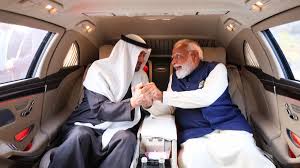
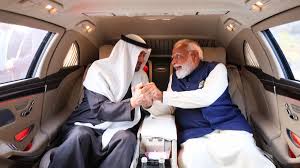
Security and maritime cooperation were also expected to feature prominently on the agenda, given the strategic importance of the Arabian Sea and the Gulf region for India’s energy supplies and global trade routes. The leaders are believed to have exchanged views on maintaining safe shipping lanes and preventing regional escalation.
Despite the brevity of the visit, diplomatic observers describe it as highly meaningful. It signals the UAE’s trust in India as a reliable partner and India’s growing role as a stabilising power in global diplomacy.
As both nations continue to expand their strategic footprint, this swift Delhi meeting reinforces the message that their partnership is no longer just economic — it is increasingly political and security-driven as well.
The meeting is widely seen as part of both nations’ efforts to strengthen bilateral ties while navigating an increasingly volatile regional landscape. With geopolitical uncertainties escalating in the Middle East, particularly involving Iran and Israel, the UAE appears keen to coordinate more closely with India on matters of regional stability and economic resilience.
During their talks, the two leaders reportedly reviewed progress in ongoing cooperation in key sectors such as renewable energy, digital infrastructure, food security, and defence collaboration. India has emerged as one of the UAE’s most important trading partners, and both sides are exploring ways to expand investment, streamline logistics, and deepen financial connectivity through platforms like UPI and local currency settlements.
Recommended Reads:
Follow us
DISCLAIMER
© 2025 Defence Insider. All rights reserved.