
Trump Announces Trade Deal With India, Cuts Tariffs to 18%
INDIAN DEFENCEGLOBAL DEFENCE
On February 2, 2026, U.S. President Donald Trump announced a significant bilateral trade agreement with India, marking a breakthrough in trade negotiations between the two countries.
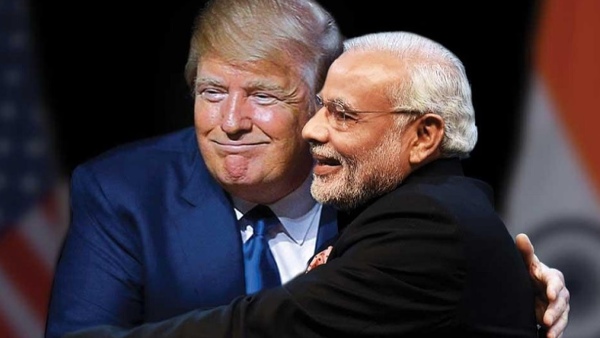
In a public statement shared shortly after his conversation with Indian Prime Minister Narendra Modi, Trump revealed that the United States would reduce its reciprocal tariffs on Indian imports from 25 per cent to 18 per cent. This decision, described as part of a broader strategic and economic partnership, aims to strengthen economic cooperation, improve market access for Indian goods, and recalibrate long-standing trade tensions.
For years, trade relations between the United States and India have been characterized by both cooperation and conflict. As two of the world’s largest democracies and emerging economic powers, they have worked together on geopolitical issues while occasionally trading barbs over trade barriers, tariff rates, and market access concerns. Trump’s announcement represents a notable shift toward a more collaborative economic relationship, signalling a willingness on both sides to engage in constructive negotiation for mutual benefit.
Under the new agreement, the reciprocal tariff — the rate the U.S. charges on imports from India — will be reduced to 18 per cent. Previously, the tariff had been elevated as part of Trump’s broader trade policy, which imposed heightened duties on a range of Indian exports in response to what Washington viewed as uneven trade practices. Reducing this tariff is expected to lower costs for Indian exporters and make Indian products more competitive in the U.S. market.
From the Indian perspective, the tariff cut is likely to stimulate export growth across multiple sectors. Indian exporters — particularly in textiles, engineering goods, pharmaceuticals, and agricultural products — have long sought greater access to U.S. markets. With the tariff reduction, these industries may find improved demand in the United States, potentially leading to higher export volumes and increased revenues. This development could be especially significant for small and medium-sized enterprises that have struggled to absorb the costs associated with higher duties.
In explaining the decision, President Trump emphasized the importance of balanced trade and reciprocity. He framed the tariff cut as a step toward addressing trade imbalances and encouraging more equitable economic engagement. According to Trump, India’s previous tariff policies placed U.S. exports at a competitive disadvantage, and the new deal reflects a mutual commitment to fairer terms. Additionally, Trump highlighted that India would take steps to reduce its own tariffs and non-tariff barriers on American goods, further deepening economic integration.
Prime Minister Narendra Modi’s involvement in the negotiations underscores India’s interest in strengthening economic ties while navigating complex geopolitical dynamics. Though full details of India’s concessions have yet to be formally published, reports suggest that Delhi is prepared to phase out tariffs on specific categories of U.S. products, potentially opening doors for American agricultural, technological, and industrial exports. This approach aligns with India’s broader strategy to attract foreign investment and integrate more fully into global supply chains.
Beyond tariffs, the deal touches on energy cooperation and global diplomatic interests. One notable aspect of the discussions between Trump and Modi was India’s commitment to halt or significantly reduce oil purchases from Russia. While official confirmation from the Indian side remains limited, several news outlets reported that this energy pivot was part of the larger context of the trade negotiations. For Trump, this shift could have implications for U.S. energy exports; for India, it represents a realignment of energy sourcing decisions in a rapidly changing global environment.
Economists believe that the tariff reduction and expanded market access could have broader ramifications for global trade patterns. Proponents argue that lowering trade barriers between two major economies like the U.S. and India can create efficiencies, increase consumer choice, and support job creation on both sides. Indian industries that see increased demand from the U.S. may scale up operations, hire additional workers, and contribute to stronger economic growth. Meanwhile, American exporters could benefit from reduced Indian tariffs, translating into improved competitiveness in Indian markets.
However, experts also caution that trade agreements of this scale are not without challenges. Changes in tariff structures can disrupt existing supply chains and impact industries differently. For example, sectors that have adapted to prior tariff regimes may need to reevaluate pricing strategies, logistics, and market entry plans. Additionally, while reduced tariffs generally benefit exporters, importers may encounter increased competition from foreign producers, leading to pressure on domestic firms.
Political analysts note that the Trump administration’s approach reflects a broader shift in U.S. trade policy — one that emphasizes negotiation and leverage over unilateral action. The focus on reciprocal tariffs is intended to encourage trading partners to reconsider their own trade barriers and align tariffs more closely with U.S. levels. In practice, this means that countries with high duties on American imports may face adjusted tariffs from the U.S. unless concessions are reached. The India deal is being cited as an example of how this strategy can produce tangible results.
From a diplomatic perspective, the agreement also highlights the personal rapport between Trump and Modi. Both leaders have publicly expressed mutual respect and a desire for closer ties, framing the deal as a testament to strong bilateral relations. While economic interests drive much of the negotiation, shared positions on key strategic issues — such as Indo-Pacific security, counterterrorism, and global governance — provide additional context for cooperation.
Looking forward, businesses and policymakers will be watching how the new tariff structure is implemented and what additional negotiations may follow. Trade agreements often evolve over time, with follow-on discussions addressing specific sectors, intellectual property rules, and investment protections. For Indian companies eager to expand into U.S. markets, the tariff cut offers immediate benefits, but sustained engagement will likely be required to fully realize long-term trade objectives.
In conclusion, the announcement of a trade deal between the United States and India, featuring a significant reduction in reciprocal tariffs to 18 per cent, represents a pivotal moment in bilateral economic relations. It reflects shared interests in enhancing trade, broadening market access, and fostering deeper economic ties. While both nations will need to navigate the complex realities of implementation, the deal lays a foundation for closer cooperation and mutual economic growth in the years ahead.
Recommended Reads:
Follow us
DISCLAIMER
© 2025 Defence Insider. All rights reserved.