
Trump says it’s ‘too late’ for talks with Iran as Israel strikes Tehran
GLOBAL DEFENCE
The Middle East is witnessing one of its most dangerous escalations in recent years as tensions between Iran and Israel intensify. The situation took a dramatic turn after Israeli forces launched strikes on Tehran and other Iranian targets.
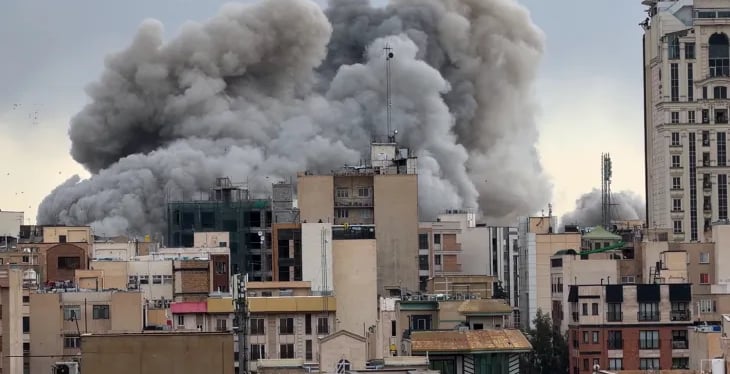
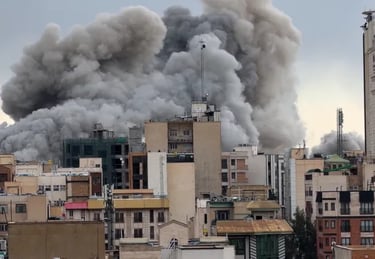
In the midst of these developments, former U.S. President Donald Trump declared that it was now “too late” for diplomatic talks with Iran, signaling a hardline stance that could reshape the geopolitical landscape of the region.
The latest escalation began when Israeli military operations targeted key installations and infrastructure inside Iran. These attacks were reportedly aimed at weakening Iran’s defense systems and strategic capabilities. According to reports, several important military facilities and leadership structures were damaged or destroyed during the strikes, marking a significant blow to Tehran’s security network.
Following the attacks, Iran responded with strong warnings and retaliatory actions.
Missiles and drones were reportedly launched toward Israeli and allied targets in the region, raising fears of a wider conflict that could involve multiple countries. As tensions grew, explosions and air defense activity were reported in Tehran, showing how serious the confrontation had become.
Amid this volatile environment, Donald Trump’s comments attracted global attention. Posting on social media, Trump stated that Iran had shown interest in talks but that the opportunity for negotiations had already passed. He argued that the country’s military infrastructure and leadership had been heavily damaged and that diplomacy at this stage was no longer realistic.
Trump’s statement represents a major shift in tone compared to earlier diplomatic efforts. For months, international leaders had been attempting to reduce tensions through negotiations related to Iran’s nuclear program and regional influence. However, the recent attacks and retaliation appear to have changed the strategic calculation for several parties involved in the conflict.
The conflict has also triggered concerns across the Middle East and beyond. Several countries fear that the confrontation between Israel and Iran could escalate into a regional war involving multiple armed groups and nations. Reports indicate that military activity has spread to other areas, including attacks on infrastructure and heightened security alerts in neighboring countries.
Another factor making the situation more dangerous is the involvement of major global powers. The United States has been closely monitoring developments and has supported Israel’s efforts to counter threats from Iran. Some analysts believe that Washington’s position, along with Trump’s strong rhetoric, could further intensify the crisis if diplomatic channels remain closed.
Experts say the conflict reflects deeper geopolitical tensions that have been building for years. Iran and Israel have long viewed each other as major strategic threats, particularly due to Iran’s nuclear ambitions and its support for armed groups across the region. Israel, on the other hand, sees Iran’s military expansion as a direct danger to its national security.
The ongoing strikes and retaliation have also had humanitarian consequences. Reports suggest that hundreds of people have been affected by the violence, with infrastructure damage and civilian casualties adding to the crisis. As the conflict continues, international organizations are urging all sides to avoid further escalation and protect civilian populations.
Another global concern is the potential economic impact of the conflict. The Middle East plays a crucial role in global energy supply, and any prolonged war in the region could disrupt oil shipments and trade routes. Some analysts warn that rising tensions around key maritime chokepoints could affect global markets and increase energy prices worldwide.
Despite the escalating situation, some world leaders are still calling for restraint and diplomatic engagement. They argue that even in times of conflict, negotiations remain the best path to prevent a full-scale war. However, Trump’s latest remarks suggest that the window for such talks may be narrowing quickly.
At the same time, political reactions within the United States and other countries remain divided. Some leaders support strong military action to counter Iran’s capabilities, while others warn that continued escalation could lead to long-term instability in the region.
As the crisis unfolds, the world is closely watching the next steps from Iran, Israel, and their allies. Whether the situation moves toward a broader war or eventually returns to diplomacy remains uncertain. What is clear, however, is that the latest strikes on Tehran and Trump’s declaration that talks are “too late” have dramatically raised the stakes in an already volatile region.
In the coming weeks, decisions made by global leaders will likely determine whether the conflict escalates further or whether a new path toward peace can still be found. For now, the Middle East stands at a critical moment, with the possibility of both confrontation and negotiation shaping the future of the region.

Recommended Reads:
Follow us
DISCLAIMER
© 2025 Defence Insider. All rights reserved.