
US–Israel Involvement Behind Iran Protest Deaths, Says Khamenei
GLOBAL DEFENCE
Iran’s Supreme Leader Ayatollah Ali Khamenei has publicly acknowledged for the first time that the recent wave of unrest in the country resulted in the deaths of thousands of people, and he directly attributed much of the violence to influence from the United States and Israel. His remarks mark a rare admission from Tehran’s highest authority about the scale of casualties during the nationwide protests triggered by deep economic and political frustrations.
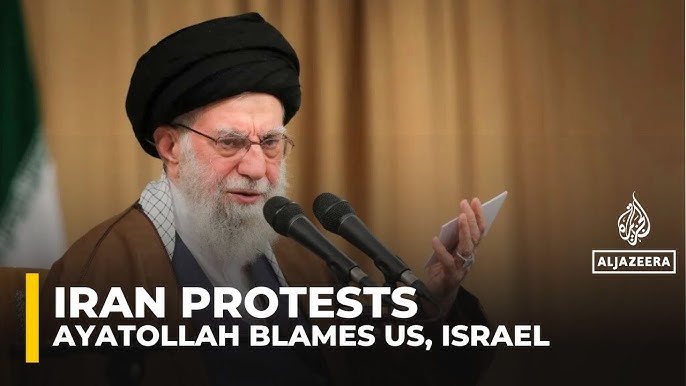
Human rights monitors outside Iran have estimated the number of fatalities in the unrest at over 3,000, with many more injured and tens of thousands arrested in the crackdown. These figures have been difficult to verify independently because of communication restrictions, including internet blackouts imposed by authorities during the peak of the demonstrations.
Khamenei’s narrative frames the protests not as a spontaneous expression of domestic grievances but as part of a broader geopolitical struggle. He accused external powers of exploiting the unrest to weaken Iran politically and socially, and he used his address to call for unity against what he described as foreign interference.
While Tehran’s leadership insists that overseas actors played a significant role, critics argue that blaming external enemies distracts from internal issues that fuelled the demonstrations in the first place. The debate over responsibility underscores the complex interplay between internal dissent and international tensions in the Middle East today.
According to Khamenei, the unrest — which began in late December as demonstrations against rising living costs and widened into broader anti-government protests — did not arise purely from internal discontent but was shaped and exacerbated by foreign involvement. He claimed those “linked to the US and Israel” were responsible for substantial damage and the loss of life, accusing them of fostering chaos and undermining Iran’s stability.
Recommended Reads:
Follow us
DISCLAIMER
© 2025 Defence Insider. All rights reserved.